Written by real camera crew

5 min read

Last updated: 15/5/2026
Whether you’ve just landed your very first job as a camera trainee or you’re already in the camera department and still finding your feet, congrats, you’re part of one of the most exciting teams on set.
Unlike runners or actors, the camera department has its own culture, quirks, and unwritten rules of set etiquette that you often only learn through experience… or by reading this guide.
What this guide isn’t.
You won’t find the usual “arrive early”, “don’t talk to actors”, or “be respectful” here.
Those things are obvious, and every other set etiquette guide covers them.
This guide is about the stuff you typically learn on the job, the subtle expectations, the unspoken rules, the habits that make people actually want to hire you again.
These tips are pulled directly from real-set experience from the camera department’s perspective.
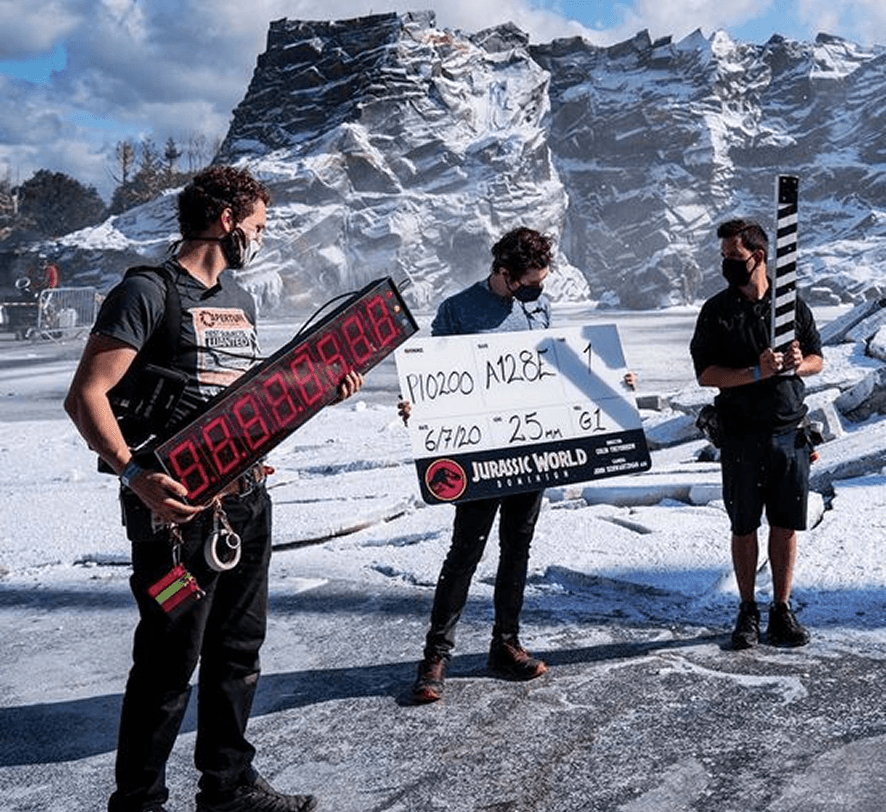
Most set etiquette guides will tell you “never take photos on set”. We disagree (with conditions). Taking photos and posting them to Instagram can help you get work. They show your experience, the scale of the productions you’ve been on, and your progression through the camera department.
A well-curated Instagram has gotten trainees hired more times than you’d think.
BUT, here are the rules:
Take photos only when you’re not busy and not filming - Never stop working to take a picture. No photo is worth looking like you don’t know your priorities.
Take photos when others in your department are too - If your 1st AC or 2nd AC has their phone out, that’s usually a green light.
Don’t post until the film/show is released - NDAs (non-disclosure agreements) are real, and productions monitor social media. Now, this doesn’t apply to general camera pictures and videos, but anything from the set shouldn’t be posted until after it’s released.
Above all, read the room - If you even slightly hesitate, don’t take the photo.
Only touch equipment that belongs to the camera department unless someone directly asks you to.
Not because departments are territorial (well… sometimes), but because:
If you move someone’s gear without them knowing, they can waste time searching for it.
You might break something you’re not familiar with.
It might be there for a reason.
If in doubt, leave it alone.
People will respect you more for not interfering than for trying to be “helpful". If something needs to be moved, get them to move it or ask if you can do it for them.
One of the strangest but most important rules in set etiquette: Do not look the talent in the eyes while filming. In fact, don’t be in their eyeline at all. No, not because you’ll turn to stone (Medusa joke), but because actors work hard to stay in the scene. One trainee staring at them can be enough to snap focus and break the moment.
If you need to be near the action:
Keep your eyes down
Or look away towards your team
Make it easy for the actor to forget 30 people are watching them.
This strangely goes for some focus pullers, too. Some focus pullers can get distracted when you’re in their peripheral vision, moving around, so stand behind them if possible.
If you’re new to film, this is probably the first time you’re using professional two-way radios.
They can make you look competent or very green within seconds.
Think before you speak - Pause half a second. Make sure what you’re about to say is necessary and clear.
Don’t hot mic - Do not lean on the PTT (push to talk) button. Nothing embarrasses a trainee (and annoys the crew) faster than breathing loudly into channel 5 for 20 seconds.
Confirm tasks - When given an instruction, always respond:
“Copy”
“On my way”
“Didn’t copy, say again”
Silence makes people wonder if you heard them or if your radio died.
Never talk during a take - If the camera is rolling, you stay silent on the radio. Full stop.
Use a covert earpiece - Never walk around blasting the entire set’s comms through your radio speaker.
As a trainee, your job, beyond learning, is to make your camera team look solid.
Why? Because they will be the ones hiring you again.
If someone on your team miscommunicates, drops something, or loses a bit of kit, don’t point it out to other crew members.
You’ve just made everyone else aware that they made a mistake and they won’t appreciate you for that.
Protect your team - Show loyalty early, and it will come back to you tenfold.
It’s very tempting to try to prove you know things.
Resist this urge.
The quickest way to annoy a camera team is to:
Correct them
Suggest alternatives
Offer unsolicited workflow tips
Comment on lighting, blocking, or lenses
Unless someone asks for your opinion, or unless you genuinely spot a problem they’ve missed and safety is involved, keep quiet and observe.
Your time to give input will come.
Knowing when to speak and when to stay quiet is part of good set etiquette.
This might be the most important rule:
Do not moan, whine, or complain on set.
Film sets are high-pressure environments with long hours.
What people want around them is:
A positive attitude
Someone who replies “No problem” and means it
Someone who handles chaos with a smile
Someone who doesn’t spread negativity
You can be tired. You can be stressed. Just don’t externalise it.
A positive trainee gets hired again. A complaining trainee doesn’t.
If you're serious about wanting to work in the UK camera department, join our free online workshop, hosted and created by camera crew working on the biggest productions.
Whether you’re completely new, or a very green camera trainee struggling to find steady work, this session is for you.
By the end of the workshop, you’ll know how to break into the camera department and land consistent camera trainee work.
(Plus, there are some great gifts included!)
Apply below for FREE entry. No gatekeeping, just practical advice from people who’ve been in your shoes.