Written by real camera crew

8 min read

Last updated: 21/8/2026
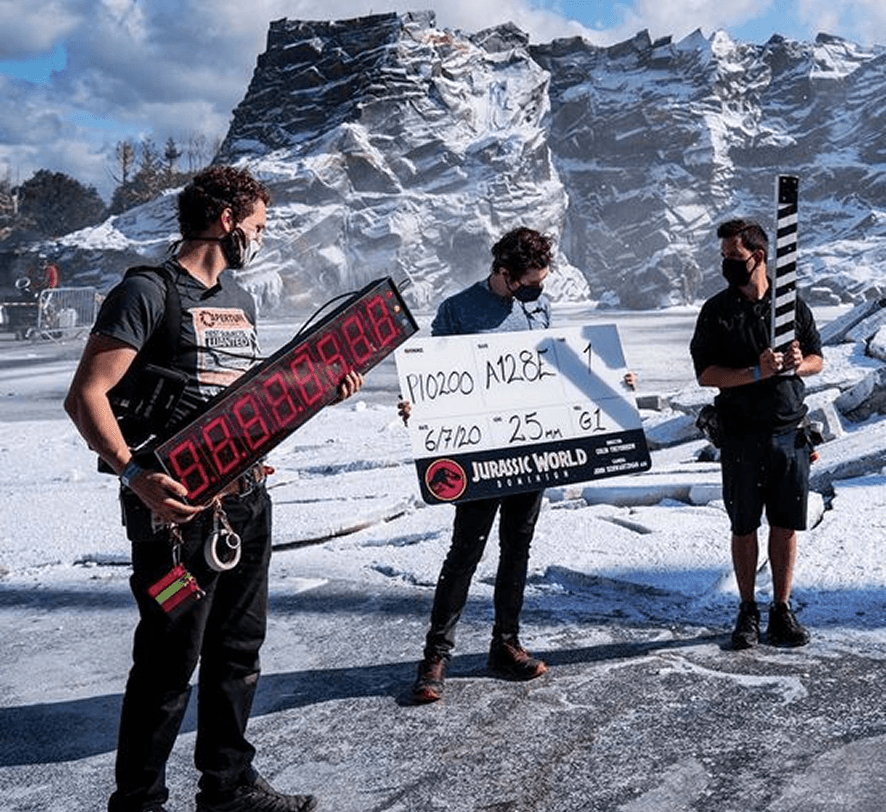
Walk onto a set for the first time and it can feel like everyone's speaking a different language. Someone calls for "sticks," a 2nd AC shouts "check the gate," and a focus puller's says "10-1" over the radio. None of it gets explained, and nobody stops to translate.
Here's what you'll walk away with:
What a camera trainee actually does day to day
Who hires Camera Trainees
The 7 routes into the camera department

These aren't camera-specific, but you'll hear them constantly regardless of department, and misunderstanding one can genuinely slow the day down.
Before You Get to Set
Call sheet - The daily schedule: call times, scenes being shot, cast and crew needed, location, weather, contacts. Read it the night before, not on the drive in.
Call time - The time you're required to be on set, ready to work, not the time you arrive at the gate.
Sides - The day's script pages, usually printed small (A5), so cast and crew can carry them in a pocket.
Crafty/Craft services - The snack and drinks table. Learn where it is early; you'll be sent there often as a trainee.
Once You're On Set
Video village - Where monitors are set up for the director, DP, and script supervisor to watch the shot. If you're a camera trainee without a dedicated video department, you may be the one setting this up and keeping it running.
Green room - Where talent rests between setups. Not somewhere you wander into without reason.
Closed set - Restricted access, often for sensitive or intimate scenes. If you hear this, don't walk on without being told to.
Last looks - The final hair, makeup, and costume check immediately before a take. If you're near set at this point, freeze and stay quiet.
When the Camera Rolls
Quiet on set - Full stop. No talking, no movement, phones off. This applies to everyone, not just cast.
Standing by - A warning that filming is about to start. Get ready to stop what you're doing.
Speed - Confirmation that camera (and sound, if separate) is running at the correct rate and ready to shoot.
Rolling / Turnover - The camera has started recording.
Action - The director's cue for performers to begin.
Cut - Filming has stopped for this take.
Crossing - A warning shout when someone needs to walk in front of, or near, a running camera. Say it before you move, every time.
Martini shot - The last shot of the shooting day (as in, "the one with the olive in it"). Morale tends to lift the moment someone says it.
Wrapping the Day
Wrap - The day's filming is finished, or the whole production has finished shooting.
Strike - Taking down and packing away equipment after a scene or the day wraps.
Dailies / rushes - The footage shot that day, reviewed by the director and DP, often that evening.

This is the vocabulary that's specific to your department. Get comfortable with these and you'll follow what your 2nd AC and 1st AC are actually asking for, instead of guessing.
Prep and Loading Terms
The barrel - Slang for the camera lens. "Pass me the 35 bottle" means the 35mm lens.
Sticks / legs - The tripod. "Sticks" can also refer to the whole tripod-and-head setup.
Mag - Short for magazine, the film canister loaded onto a camera on productions still shooting on film. On digital productions, the equivalent conversation is about cards or drives, and "downloading" them at the end of a setup.
Camera report - The paperwork tracking what was shot on each roll, card, or scene: takes, timecodes, notes for the lab or editor. As a trainee, you'll often help fill these in.
Check the gate - Traditionally, checking the film gate for hair or dust after a take, on film cameras. The phrase has stuck around on digital sets too, as a general "confirm everything looked clean" check before moving on.
Onset Camera Terms
Marks - Tape on the floor showing where an actor should stand, or where focus should land. Camera marks and actor marks aren't always the same thing, and mixing them up is a classic early mistake.
Points - Focus distances a focus puller uses to pull focus smoothly between two positions during a take. You might hear "give me your first point, second point" during a rehearsal.
Eyeline - The direction an actor is meant to look. Camera trainees are told to stay out of it, constantly, for good reason: breaking an actor's eyeline can ruin a take.
Insert - A close-up or detail shot, often picked up separately from the main coverage (a hand reaching for a phone, a close-up of a note).
A cam / B cam - Shorthand for which camera is which, when more than one is shooting the same setup.
MOS - Filming without sound. Nobody agrees on what it actually stands for (the most common story is a mangled "mit out sound" from an early German-accented director), but it means don't worry about audio for this shot.
10-1 - Radio code for a bathroom break.
You'll Pick the Rest Up Fast
Nobody expects a trainee to walk in fluent. Most of this becomes second nature within a few days on set, simply from hearing it repeated in context. If you want a head start on everything else that comes with the job, not just the vocabulary, join our free online workshop, hosted by working UK camera crew: