Written by real camera crew

8 min read

Last updated: 21/8/2026
You've done the tea runs. You've kept your CV updated. You've told everyone on set that you want to be in the camera department.
And you're still a runner.
Here's the part nobody explains: camera trainee jobs are barely ever won by applying. They're won by recommendation.
Every route below is a different way of getting in front of the right people and giving them a reason to say yes.
Here's what you'll walk away with:
What a camera trainee actually does day to day
Who hires Camera Trainees
The 7 routes into the camera department

A camera trainee supports the camera department on set, working most closely with the 2nd AC (second assistant camera). The role is split between practical support and hands-on learning: you help the department run smoothly while picking up the skills that move you toward the 2nd AC role yourself.
Exact duties shift depending on the type and budget of production, but on a typical UK set a camera trainee can expect to:
Keep camera equipment organised, clean, and ready to move
Set up video village when there's no separate video department
Help move kit between setups
Keep batteries charged throughout the day
Assist with camera reports and paperwork
Cover general department needs - tea runs, lens cleaning, collecting lunch orders, standing in when someone's needed elsewhere
Watch, ask questions at the right moments, and take on more technical tasks as trust builds
It's an unglamorous mix, and that's the point. The trainees who get asked back are the ones who treat the small tasks as seriously as the technical ones.

Production formalises the paperwork, but they're rarely the ones deciding who gets the job. That decision sits with the camera team, who recommend trainees they already know and trust to the DP or production.
This is the single most important thing to understand before you start applying for anything: camera trainee jobs are filled by recommendation far more often than application. Every route in this guide is a different way of getting in front of a camera team and giving them a reason to vouch for you.
What camera teams look for in a trainee
Good communication - you confirm instructions are understood, keep people updated, and ask questions at appropriate moments
Proactive - you anticipate what's needed instead of waiting to be told, which comes with reps
Calm under pressure - film sets can be chaotic at times, staying level earns trust fast
Knows the basics - you're not expected to know everything, but understanding fundamentals and handling simple tasks well puts you ahead of other beginners
Easy to work with - days are long and crews are tight; people who are pleasant and reliable get asked back
Learns quickly - you take feedback without repeating the same mistakes
Every route below gets you in front of the people who hire. None of them is a guarantee. Most people who make it use two or three of these at once.

1. Trainee Schemes
A handful of UK schemes place new entrants directly onto professional productions with little or no prior experience required. ScreenSkills' Trainee Finder is the biggest of these: it places trainees across 11 departments, including camera, on film, high-end TV, and children's TV productions, with placements running 4 to 20 weeks over the scheme year. Eligibility generally requires under 12 months of paid production experience in your chosen department - no on-set experience is required to apply, just a demonstrated interest and relevant skills.
A direct, paid route onto a professional production - feature films and high-end dramas you'd have no realistic way of accessing on your own at this stage. Real credits and contacts from inside a working camera department, no existing network required.
Pro
Camera is consistently among the most applied-to department on the scheme, so competition for a handful of places is steep. Applications open once a year on a fixed window - mark the date, prepare your application in advance, and treat it as seriously as a job interview.
Con
2. Work at a Camera Rental House
One of the most underrated routes into the department, and one of the most effective. UK rental houses - Panavision, ARRI Rental, and One Stop Films among them - are where productions collect and return their kit. 1st and 2nd ACs come in constantly to prep, test, and collect equipment before a shoot.
Working in a rental house means handling professional cameras, lenses, and accessories daily, and meeting the people who use them on set on a near-weekly basis.
Genuine technical knowledge that hiring crew notice and value, especially while your credits are still thin. More importantly, you're meeting working 1st and 2nd ACs regularly as they come in and out - relationships that turn into weekend cover work and, eventually, longer-term jobs.
Pro
It's a commitment, not a quick stepping stone. Expect to work at the rental house for a year or more before moving into camera trainee work on set. If your priority is getting onto a set as fast as possible, other routes move faster.
Con
3. Start as a Floor Runner
Getting on set in any capacity puts you in the room with the people you want to work for. As a runner, you're often alongside the same crew for weeks at a time. Do the job well, be someone people enjoy having around, and build real relationships with the departments around you, camera included.
By the end of a long job, that crew knows you're reliable and easy to work with. That familiarity is hard to manufacture any other way - it's exactly the foundation that leads to someone thinking of you when a camera trainee spot opens up.
4. Volunteer on Prep Days
Prep days - when the camera department builds the package, tests equipment, and gets ready for the shoot - are lower-pressure than shoot days, which makes them a good place to make a first impression. Reach out to a 2nd AC and offer your time for free, with no expectations attached. It gives them a low-risk way to see how you work before putting you on an actual shoot day.
Low barrier to entry, no credits needed. One good prep day with the right 2nd AC can lead directly to paid work.
Pro
ACs often bring their own trainee with them, so there isn't always a spot open. On lower-budget productions, the department may run with just a 1st and 2nd AC and no trainee at all - which is exactly your opening.
Con
Short Films and Student Productions
Short films are where most people land their first credit, and credits are what start to matter once you're applying for anything formal.
Take the job as a camera trainee, not as an AC - it can be tempting to take a more senior-sounding title on a low-budget short, but a camera trainee credit on a legitimate production reads better on a CV than an inflated title that doesn't match your actual experience.
Tip
The lowest barrier to entry for getting on set and building credits. Shorts are easy to find and consistently need crew
Pro
Unpaid or low-paid, and often less professionally run than you'd like. Treat these as a means to an end - credits and reps - rather than a polished production experience.
Con
6. Instagram Crew Calls
More camera trainees find work through Instagram than most people expect. DPs, 2nd ACs, and 1st ACs regularly post crew calls on their stories, often for same-week or next-day starts.
Follow crew in your area, turn on story notifications, and reply fast when a call goes up - these posts reach hundreds of followers, and the first few responses are usually the ones who get considered.
Keep your profile public, with real photos of you (set photos too, if you've got them). A ghost account replying to a crew call is easy to scroll past.
Tip
A well-timed reply to the right story has started a lot of careers.
Pro
You need to already be following the right people, and you need to respond quickly when the moment comes.
Con
7. Facebook Groups
Several UK Facebook groups post regular crew calls, camera-specific roles included. Worth checking:
Free, easy to access, and regularly updated - a strong source of short-form work like commercials, music videos, and low-budget shoots.
Pro
Competition is high since everyone at your stage is watching the same groups. It's unlikely you'll get accepted, especially with minimal set experience.
Con
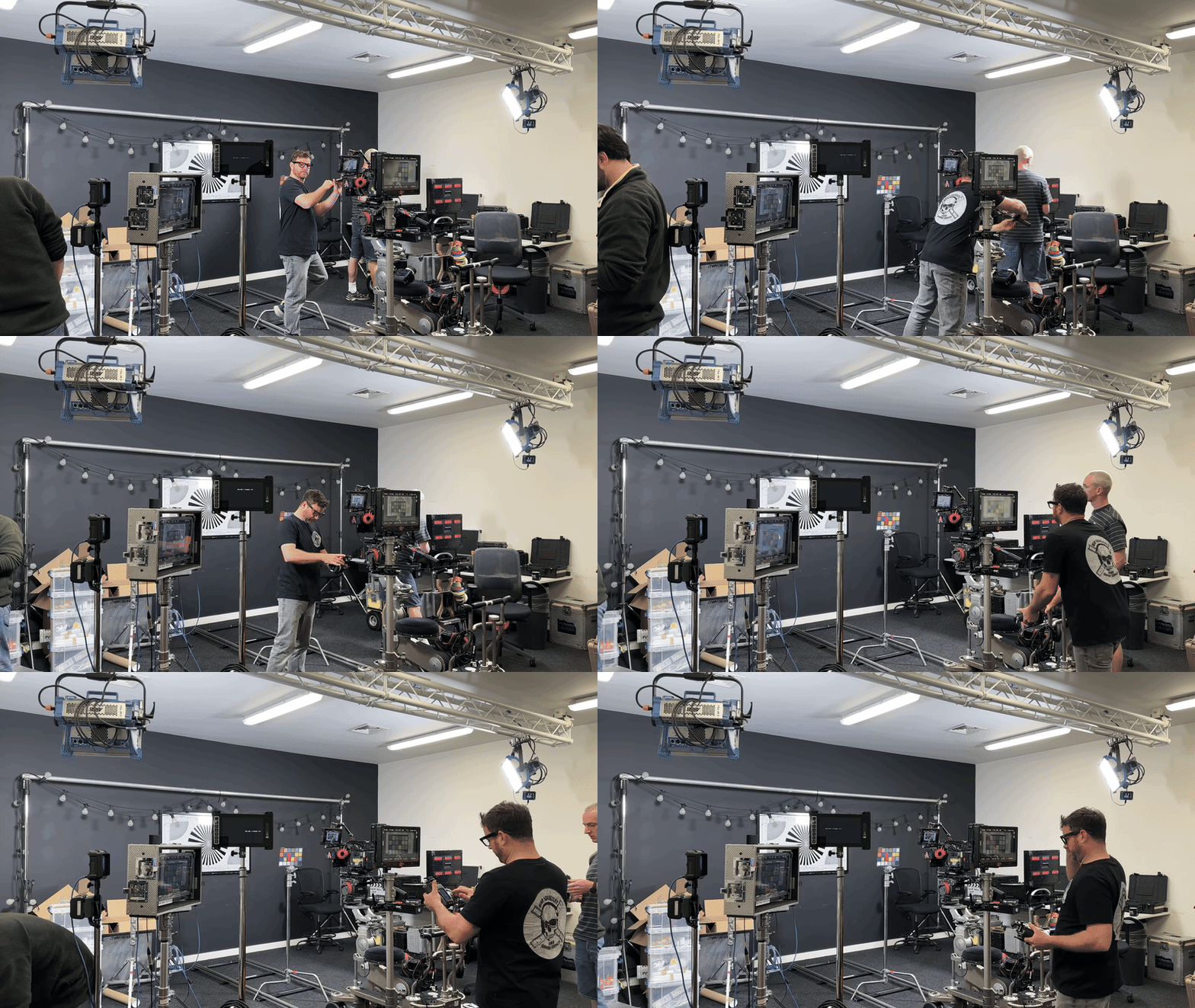
No formal qualification is required to work as a camera trainee in the UK. In the freelance world, attitude, reliability, and practical skill matter more than certificates.
That said, trainee workshops, short courses, and scheme-based training can help - particularly early on, when crew don't yet know you and a course signals that you've put in some groundwork before turning up on set.
Every route here is just a different way of getting yourself in front of the right people.
But there's much more that goes into getting hired than you may think.
If you're serious about wanting to work in the UK camera department, join our free online workshop, hosted and created by camera crew working on the biggest productions.
Whether you’re completely new, or a very green camera trainee struggling to find steady work, this session is for you.
By the end of the workshop, you’ll know how to break into the camera department and land consistent camera trainee work.
(Plus, there are some great gifts included!)
Apply below for FREE entry. No gatekeeping, just practical advice from people who’ve been in your shoes.